Africa must not copy the West – expert
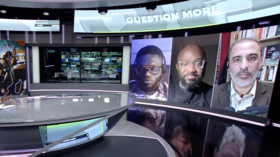
African states must build their own forms of democratic governance rather than imitating Western systems, former Libyan Information Minister Moussa Ibrahim has said during an RT-hosted panel discussion.
Ibrahim, the executive secretary of the African Legacy Foundation, stressed that the continent’s diverse heritage offers deep foundations for self-determined political models, and warned against replicating Eurocentric frameworks that often ignore the realities of the continent.
“We must not copy the West – we must pay attention to our traditional values, to our ethnic and social structures,” Ibrahim said. “Africa is a very diverse, rich continent full of tradition,” and it needs to bring the “essential values of democracy” into modern African society in its own way.
According to Ibrahim, the transformation requires pan-African integration. He insisted that genuine democracy is impossible without sovereign control over currency, banking, and natural wealth, citing countries such as Gabon and Guinea-Bissau as examples of nations vulnerable to external manipulation due to economic dependence.
The panel took place against the backdrop of political turbulence in Guinea-Bissau. On Wednesday, army officers declared they had seized “total control” of the West African nation, suspended all state institutions, and closed the country’s borders on the eve of the electoral commission’s planned release of results from a disputed election.
The military declared the formation of a new government called the High Military Command for the Restoration of Order, and swore in army chief General Horta Nta Na Man as transitional leader for a one-year period.
Speaking about the situation in the country, Samson Itodo, executive director of the Yiaga Africa civil society, argued that the core problem lies “not in elections themselves... [but in] the quality of those elections.” He warned that polls across the region are increasingly being “captured by political elites who want power at all costs.”
Nigerian investigative journalist David Hundeyin argued that Africans are still treated as “subjects” rather than citizens, due to enduring colonial structures in law, policing, and governance. “The government… is essentially an inherited governance structure,” he said, adding that economic disempowerment makes democratic participation feel meaningless for many.